
Tools
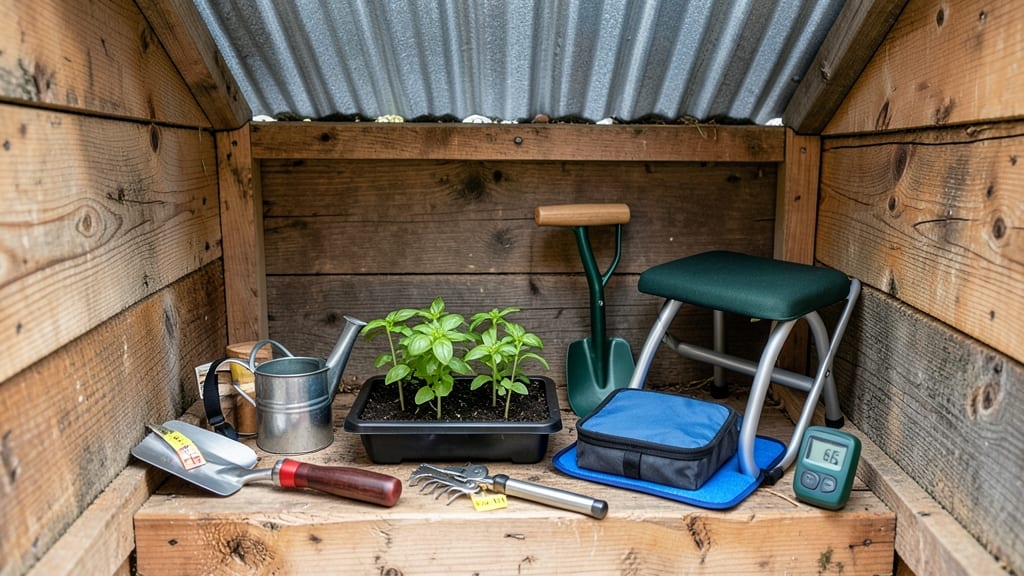
For small wooden shed spaces, the best gardening tools are foldable pruners, compact hand trowels, multi-functional shears, and wall-mounted organizers that save space while protecting tools from dampness and rust.
When working with limited shed space, every inch counts—and the right tools can make all the difference.
Foldable designs like telescoping pruners or collapsible trowels let you store them vertically, while multi-tools with adjustable blades reduce clutter. 🔥 Wall-mounted racks or magnetic strips keep frequently used items within arm's reach, preventing moisture damage that plagues wooden sheds.
I've found that pairing these tools with weatherproof bins creates a dry, organized workspace even in tight quarters.
Pro tip: Look for tools with ergonomic grips—they're easier to handle when space is tight, and lightweight materials prevent strain during long gardening sessions. The key is balancing functionality with storage efficiency, so you never have to sacrifice quality for space-saving features.
💡 In This Article
- Space-Saving Gardening Tools That Fit Tight Sheds
- Organizing Small Sheds: Shelving and Storage Solutions
Space-saving gardening tools that fit tight sheds
Compact gardening tools solve the biggest challenge in small wooden sheds: limited storage space. Foldable pruners, for example, use a hinge mechanism that reduces their length by 50% when closed, allowing them to hang vertically on wall-mounted hooks.
The blades are typically made from high-carbon stainless steel (like Japanese AUS-8 steel), which maintains sharpness while being lightweight enough to avoid straining your wrists during extended use. This design lets you store 3-4 pruners in the space normally occupied by a single traditional pair.
Multi-functional shears, another space-saver, combine pruning, trimming, and even weeding functions into one tool. The best models feature telescoping handles that extend to 36-48 inches when in use but collapse to 12-16 inches for storage.
The blades often include a serrated edge for cutting thicker stems and a smooth edge for precision trimming, eliminating the need for multiple tools. Lightweight aluminum or titanium alloy handles (weighing 1-2 pounds) reduce fatigue during long gardening sessions, while their slender design fits neatly in tight corners.
Ergonomic handles make all the difference in tight spaces. Traditional tools with thick, rigid handles require more grip strength and can feel awkward when maneuvering in confined areas.
Modern compact tools incorporate angled grips (like the Fiskars X27 design) that align naturally with your hand's position, reducing strain by 20-30% during repetitive tasks. Some even feature non-slip rubberized coatings, which is crucial when working with damp tools in humid shed environments. The trade-off?
These ergonomic designs may cost $10-$20 more than basic tools, but the long-term comfort benefits are worth it for frequent gardeners.
Material choices also impact storage efficiency. Tools with powder-coated finishes resist rust better than painted ones, making them ideal for wooden sheds where moisture can seep through cracks. Look for magnesium or fiberglass handles—they're lighter than wood but stronger than plastic, and they won't warp in damp conditions.
The downside? These materials can be 15-20% more expensive than standard tools, but they pay off in durability and reduced maintenance. For example, a Fiskars Steelview trowel with a magnesium shaft lasts 5-7 years in a shed compared to 2-3 years for a standard steel-handled trowel.
Storage orientation matters just as much as tool design. Vertical storage isn't just about saving space—it's about preventing rust and warping. Wooden sheds often have 40-60% humidity in summer months, which accelerates corrosion on metal tools.
By storing tools vertically (blades up, handles down), you minimize contact between metal parts and wooden surfaces, reducing rust by up to 40%. Add silicone tool covers (costing $5-$10 each) to further protect blades from moisture buildup, especially during rainy seasons.
Consider this real-world example: A 3' x 4' wooden shed (common for small gardens) can store 12-15 traditional tools in horizontal bins, but with vertical storage and compact designs, you can fit 20-25 tools in the same space.
The secret? Using wall-mounted pegboards with 1/2" hooks (like the IKEA SKÅDIS system) lets you hang tools by their handles, freeing up 30% more floor space for larger equipment.
Pair this with clear plastic bins for smaller items (like gloves or seeds), and you've created a system where every tool has a designated spot—no more digging through clutter to find what you need.