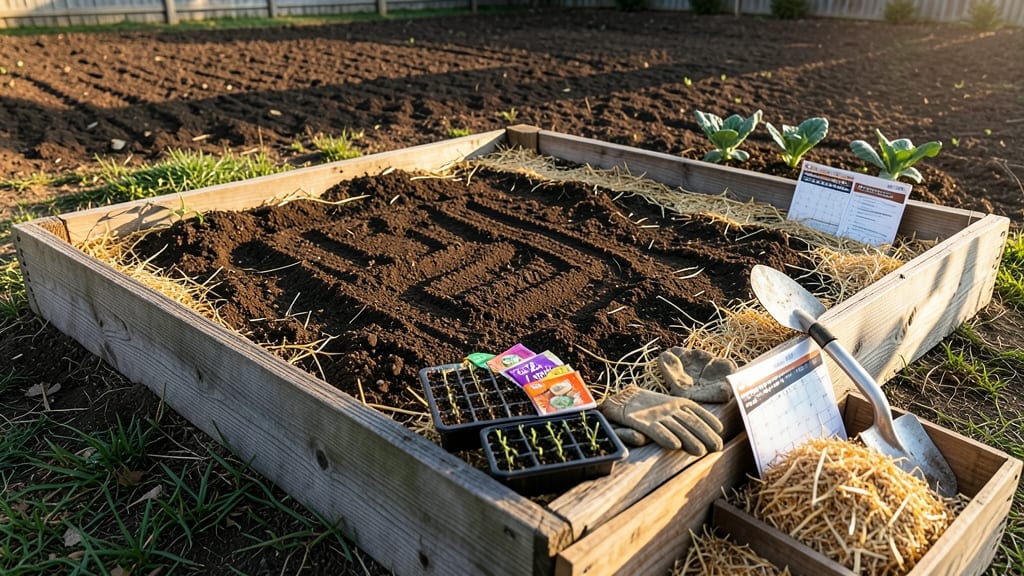
Planting a garden in Georgia at the right time means the difference between a bumper crop and a sad, wilted mess 🌱—and the best window for most crops opens by mid-March in most of the state.
You’ve got the soil ready, the seeds picked out, and maybe even a dream vision of your harvest. But if you plant too early, a late frost will turn your tender seedlings into confetti. Too late, and the heat arrives before your tomatoes set fruit.
Georgia’s 7a–8b zones stretch from the coastal plains to the Appalachian foothills, each with its own frost schedule. Coastal areas can start as early as February, while mountain regions might wait until April—and that’s just for cool-season crops.
Below, I’ll break down the exact planting windows for your region, how to prep soil for spring and fall, and the succession-planting tricks that let you squeeze extra harvests from Georgia’s long growing season.
🌱When to Plant General Garden Garden
Jan❄️
Feb🌱
Mar🌱
Apr🌱
May🌱
Jun☀️
Jul☀️
Aug☀️
Sep🍂
Oct🍂
Nov🍂
Dec❄️
Ideal Time
Also Good
Georgia last frost dates by region: when to plant cool vs warm-season crops
Georgia’s diverse climate—from the coastal plains to the Appalachian Mountains—creates distinct frost zones that dictate your planting schedule. The last spring frost typically arrives between mid-March and early April, while the first fall frost hits mid-October to mid-November.
Knowing these dates helps you avoid frost damage to tender plants like tomatoes and peppers while maximizing harvests from cool-season crops like spinach and kale.
Most of Georgia falls within USDA Zones 7a-8b, but microclimates—like urban heat islands or high-elevation areas—can shift frost dates by 1-2 weeks. For example, Athens (Zone 8a) has a later last frost (April 15) than Dalton (Zone 7a) (March 20).
Always check local Almanac frost records or use a frost-free date calculator for your exact location.
Here’s how to use these dates: Plant warm-season crops (like squash and beans) 2-3 weeks after your last frost date.
For cool-season crops (such as broccoli and peas), start seeds indoors 6-8 weeks before your last frost or sow directly 4-6 weeks before to avoid bolting in warm soil.
Fall planting is equally critical. Direct-sow cool-season crops like lettuce and radishes6-8 weeks before your first frost (e.g., September 15 in Zone 7a). For overwintering greens (kale, collards), plant 8-10 weeks before the first frost to ensure a harvest before hard freezes.
Georgia Frost Dates & Planting Windows by Region
Region
USDA Zone
Last Spring Frost
First Fall Frost
Warm-Season Start
Cool-Season End
Coastal Plains (Savannah, Brunswick)
8a-8b
March 25
November 10
April 10
October 1
Piedmont (Atlanta, Macon)
7b-8a
March 15
October 31
March 30
September 15
North Georgia (Dalton, Blue Ridge)
7a
March 20
October 15
April 5
September 1
Valley (Rome, Carrollton)
7b
March 10
October 25
March 25
September 10
Soil preparation checklist for Georgia gardens: pH, amendments & timing
Georgia’s clay-heavy soils and humid climate demand careful preparation to create the perfect growing conditions. Before planting your garden, focus on three critical factors: soil pH, organic amendments, and timing.
Most Georgia plants thrive in a pH range of 6.0–7.0, but clay soils often need extra attention to improve drainage and fertility.
Start by testing your soil’s pH using a simple home test kit or send a sample to the University of Georgia Extension.
If your soil is too acidic (below 6.0), add lime to raise the pH. For alkaline soils (above 7.0), incorporate sulfur or peat moss to lower it gradually. Georgia’s clay soils also benefit from organic matter like compost or worm castings to loosen the texture.
📅 Spring Prep: Test soil in February; amend beds by March 1 for early planting.
🌱 Amendments: Mix in 2–3 inches of compost or aged manure per square foot.
💧 Watering: Deep-water amended beds 2–3 days before planting to settle soil.
✂️ Fall Prep: Test soil in September; add organic matter by October 15.
🌡️ Clay Soils: Till in sand or perlite (20%) to improve drainage.
For spring planting, aim to finish soil prep at least 2–3 weeks before your last frost date (typically mid-March in most of Georgia). Work in compost or well-rotted manure to feed hungry crops like tomatoes and peppers.
In fall, focus on building soil health for next year by adding cover crops like clover or winter rye, which prevent erosion and add nitrogen.
Georgia’s clay soils can be tricky—amend them with sand or gypsum to break up compaction, but avoid over-tilling, which can create a hardpan. Mulch with straw or wood chips after planting to retain moisture and suppress weeds. This is especially important during Georgia’s hot, humid summers when evaporation rates soar.
Don’t forget to rotate crops annually to prevent disease buildup. For example, plant tomatoes where beans grew last year, as they belong to different plant families. This simple step reduces pests and improves soil fertility over time.
With the right soil prep, your Georgia garden will be ready to thrive—whether you’re planting cool-season crops in spring or warm-season favorites in fall. Happy gardening! 🌱