
Picking
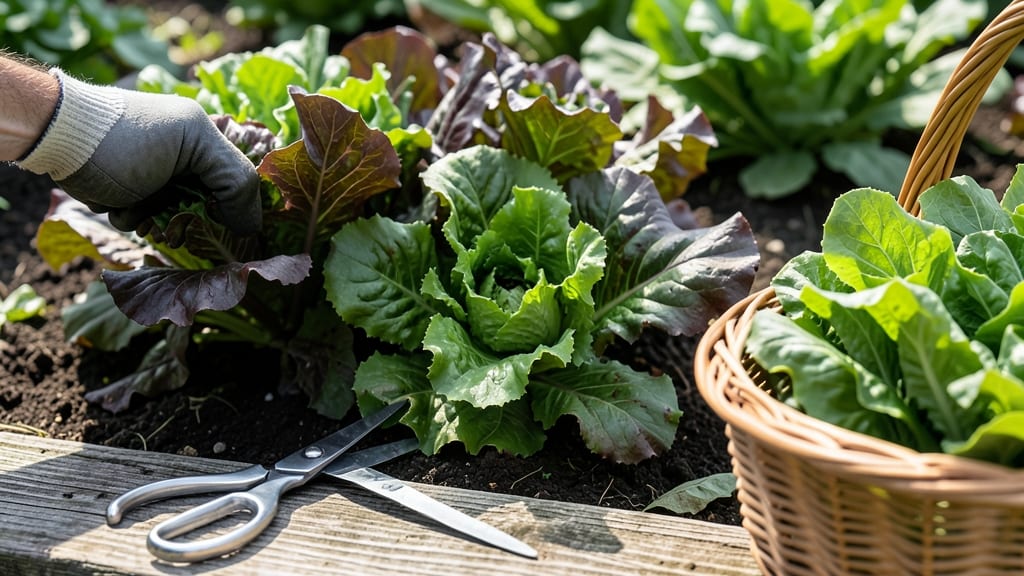
To pick lettuce from your garden at the perfect moment means the difference between a salad bursting with crisp, sweet flavor and one that’s bitter or wilted before you even eat it.
Picture this: you’ve been watching your 🥬 grow for weeks, and now the outer leaves are finally big enough to harvest—but are they really ready? Or will you wait too long and watch them bolt into flower stalks overnight?
Timing matters more than you might think. Harvest too early, and the leaves won’t be fully flavorful; too late, and you’re left with tough, seedy greens. The key is knowing when the leaves hit that sweet spot—when they’re large enough to eat but still tender and packed with nutrients.
In this guide, I’ll walk you through the exact signs to look for, from leaf size to texture, plus how weather and variety affect your harvest window. By the end, you’ll never second-guess when to snip again.


How to test lettuce for perfect harvest readiness (crispness & size guide)
Harvesting lettuce at the right moment transforms your garden into a crisp, flavorful salad bar. The key lies in combining visual cues with texture tests—because waiting too long means bitter, tough leaves, while picking too early wastes your effort.
I’ve learned that leaf size, stem thickness, and crispness are the holy trinity of perfect lettuce harvest timing.
Start by checking the outer leaves, which are always the first to reach maturity. These should be your primary focus since they’re the most tender. If you’re growing loose-leaf varieties, you can harvest individual leaves as they reach readiness, while head lettuce needs a more precise timing window.
The ideal harvest window is typically 45-60 days after planting, but this varies by variety.
Step-by-Step Lettuce Harvest Readiness Test
-
Step 1: Check Leaf Size
Measure the outer leaves—they should be 2-3 inches long for most varieties. Use your thumb and forefinger to gauge thickness; it should feel firm but pliable, like a fresh green bean.
-
Step 2: Perform the Crispness Test
Gently squeeze a leaf between your fingers. If it holds its shape and feels crisp but not brittle, it’s ready. A leaf that collapses easily needs more time, while one that feels woody or tough is overripe.
-
Step 3: Inspect the Stem
Look for a thick, white stem (about 1/4-inch diameter). Thin stems mean the plant isn’t mature enough, while thick, woody stems signal it’s past its prime. Also check for bolting signs—a tall, flower stalk emerging from the center.
-
Step 4: Examine Leaf Color
Vibrant, deep green (or red/purple for heirloom types) means peak flavor. Pale or yellowing leaves indicate stress or overmaturity. Avoid harvesting if leaves have brown edges, a sign of heat or water stress.
-
Step 5: Time Your Harvest
Morning harvests yield the crispest lettuce since leaves hold moisture overnight. Use clean scissors or pruners to cut 1 inch above the base for head lettuce, or snip individual leaves from loose-leaf types.
One mistake I used to make was harvesting based solely on days after planting, but weather plays a huge role. Cool spring mornings (50-65°F) produce the sweetest, crispest lettuce, while hot summer days (above 80°F) can cause bolting—even if leaves look perfect.
If your lettuce starts sending up a flower stalk, it’s already past its prime for eating.
For loose-leaf varieties like Buttercrunch or Oakleaf, you can harvest outer leaves first to encourage regrowth. This method lets you enjoy lettuce for weeks longer than a one-time harvest.
Just avoid taking more than 1/3 of the plant at once to prevent stress. I’ve extended my harvest season by 4-6 weeks using this technique!
If your lettuce is head varieties like Romaine or Iceberg, timing is even more critical. These types form a compact head, and harvesting too late means a tough, bitter core.
The head should feel heavy for its size—a sign of full maturity. If the head feels light or loose, it needs more time.
After harvesting, store lettuce properly to maintain crispness. Wrap loose leaves in a damp paper towel and place in a sealed container in the fridge. For whole heads, trim the base and store upright in a glass of water in the crisper drawer.
This keeps them fresh for up to 2 weeks, though I’ve found homegrown lettuce tastes best within 5-7 days of harvest.
Pro tip: If your lettuce starts to bolt prematurely, try shading cloth or moving pots to a cooler, shadier spot to delay flowering. I’ve saved multiple harvests this way during unexpected heatwaves.
The key is acting fast—once that flower stalk appears, the leaves turn bitter within 3-5 days.
Remember, every lettuce variety has its own maturity timeline. While loose-leaf types may be ready in 28-35 days, head lettuce often needs 50-60 days. Always check the seed packet for variety-specific guidance, but trust your sensory tests first—they’re the most reliable indicators.
With these steps, you’ll never again guess whether your lettuce is ready. Instead, you’ll harvest at peak crispness, ensuring every salad is a flavorful success. Happy harvesting! 🥬
Lettuce variety harvest times compared: leaf vs. head lettuce differences
Not all lettuce is created equal when it comes to harvest timing. Leaf lettuce like romaine and loose-leaf varieties mature faster than head lettuce like butterhead or iceberg, but waiting too long ruins crispness. Understanding these differences ensures you enjoy fresh, flavorful greens instead of bitter or bolted plants.
The key difference lies in their growth habits: leaf lettuce produces harvestable outer leaves within 30-45 days, while head lettuce needs 50-60 days to form a tight, compact head. Overlooking these timelines often leads to disappointment—especially when heat stress or drought causes premature bolting.
| Variety | Days to Harvest | Maturity Indicator | Harvest Method | Avoid Waiting Past |
|---|---|---|---|---|
| Loose-Leaf (e.g., Black Seeded Simpson) | 30-45 days | Outer leaves 2-3" long, crisp texture | Cut-and-come-again (outer leaves) | 50 days (bitterness risk) |
| Romaine (e.g., Paris Island) | 45-55 days | Tight, elongated head, 10-12" tall | Harvest entire head at base | 60 days (woody stems) |
| Butterhead (e.g., Bibb) | 50-60 days | Soft, buttery heads 4-6" wide | Cut entire head 1" above soil | 65 days (bolting risk) |
| Iceberg (e.g., Great Lakes) | 70-80 days | Firm, crisp head 6-8" wide | Harvest entire head at base | 90 days (extreme bitterness) |
For loose-leaf varieties, I recommend harvesting outer leaves when they reach 2-3 inches—this encourages continuous regrowth. Romaine and butterhead should be picked when their heads are fully formed but still tender, typically 45-60 days after sowing. Waiting too long turns leaves bitter or causes stems to harden.
Iceberg lettuce is the exception—it requires the longest growing season (70-80 days) and must be harvested when heads are firm and fully closed. The trade-off? Its extended maturity makes it more vulnerable to heat stress or pest damage, so I plant it in early spring or late summer to avoid summer bolting.
Pro tip: Check for bolting signs (tall flower stalks) before harvest—this means the lettuce has gone to seed and lost quality. If you spot a stalk, harvest immediately or remove the plant to prevent seed spread.
For cut-and-come-again varieties, leave the inner leaves intact to regrow for 2-3 additional harvests.
Always harvest in the morning when temperatures are coolest to preserve crispness. Store harvested lettuce in the crisper drawer of your fridge, wrapped in a damp paper towel, to extend freshness for 5-7 days. With these timelines, you’ll enjoy homegrown lettuce at its peak—no wilted greens allowed! 🥬