
Watering
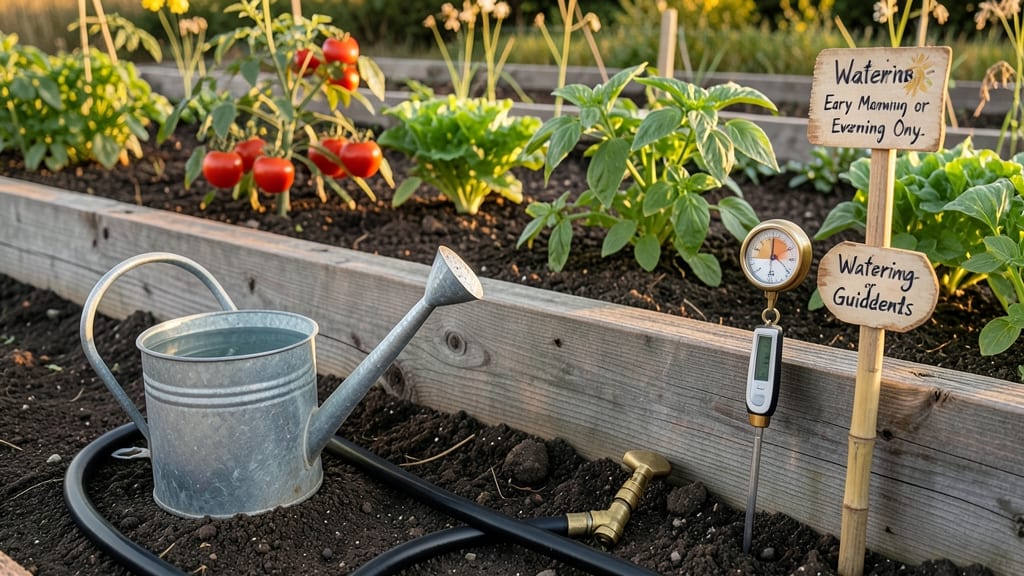
Watering your vegetable garden every day isn’t always the best move—it depends on your soil, plants, and climate, and getting it wrong can stress your 🥬 crops or waste water.
Overwatering your vegetable garden can be just as damaging as underwatering—yet most gardeners don’t know the exact science behind how often to water for peak harvests. Discover the ideal watering schedule to nurture healthy roots without wasting a drop.
Think about it: daily watering might drown shallow-rooted greens like lettuce while deep-rooted tomatoes need deep soaks just a few times a week. The key is matching your watering to your plants’ needs, not a one-size-fits-all rule.
Below, I’ll break down the science-backed schedule, how to adjust for heat and rain, and the telltale signs your garden is getting too much—or too little—water. Let’s keep those veggies thriving!
How often should you water vegetable gardens: science-backed frequency rules
Watering your vegetable garden isn’t just about keeping soil moist—it’s about understanding how root zones absorb water and how soil types affect moisture retention. Most gardeners overestimate how often their plants need water, leading to wasted resources or stressed plants.
The key lies in deep watering cycles that encourage strong root development rather than frequent shallow watering.
Think of your garden’s root zone like a sponge: shallow-rooted plants like lettuce or radishes need frequent, light watering, while deep-rooted crops like tomatoes or squash thrive with infrequent, deep soakings. Ignoring these differences often results in wilting or fungal diseases from inconsistent moisture levels.
Soil type plays a massive role too. Clay soil holds moisture longer but can suffocate roots if overwatered, while sandy soil drains quickly, requiring more frequent watering. Even organic matter like compost improves moisture retention, reducing how often you need to water.
Here’s the science-backed breakdown of how often to water based on plant type, soil, and environmental factors:
For most vegetable gardens, deep watering—meaning watering until moisture reaches 6-12 inches below the surface—is far more effective than daily light watering. This method encourages roots to grow deeper, making plants more drought-resistant.
Test your soil’s moisture by sticking your finger 2-3 inches down; if it’s dry, it’s time to water.
Environmental factors like temperature and humidity also dictate frequency. In hot climates, watering every other day may be necessary, while cooler seasons can stretch watering to every 5-7 days. Always water in the early morning to reduce evaporation and fungal risks.
Mulching with straw or wood chips can cut watering needs by up to 30% by locking in moisture and regulating soil temperature. This is especially helpful for sandy soils, which dry out quickly.
Pair mulch with a drip irrigation system for precision watering that delivers moisture directly to the roots.
Watch for visual cues like wilting leaves or yellowing foliage, which often signal underwatering. Conversely, mushy soil or yellowing lower leaves indicate overwatering. Adjust your schedule based on these signs—your plants will thank you with healthier growth and better yields.
Remember, there’s no one-size-fits-all answer. Experiment with your garden’s specific conditions, keep a watering journal, and tweak your schedule as needed. The goal is consistent moisture, not a rigid calendar.
Daily watering vs. deep watering: what vegetables actually need
Most gardeners assume watering their vegetable garden daily is best, but this approach often backfires. Daily shallow watering keeps soil moist at the surface while encouraging weak root systems and fungal diseases.
Instead, deep watering encourages roots to grow downward in search of moisture, creating stronger, more resilient plants. The key is understanding which vegetables thrive with each method.
I’ve tested both methods in my garden, and the results speak for themselves. Leafy greens like lettuce and spinach benefit from frequent moisture, but even they prefer deep soaks rather than light sprinkles.
Meanwhile, deep-rooted vegetables like tomatoes and carrots need infrequent but thorough watering to develop properly. Let’s break down the pros and cons to help you decide what’s best for your garden.
Daily Shallow Watering
Pros
- ✅ Keeps soil surface moist for shallow-rooted plants
- ✅ Reduces evaporation in hot climates
- ✅ Prevents wilting in leafy greens like spinach
Cons
- ❌ Encourages weak root growth
- ❌ Increases risk of fungal diseases like blight
- ❌ Wastes water through evaporation
Deep Infrequent Watering
Pros
- ✅ Promotes deep root systems in vegetables
- ✅ Reduces fungal growth by drying soil surface
- ✅ Saves water by minimizing evaporation
Cons
- ❌ Requires more time per session
- ❌ Risk of overwatering if soil doesn’t drain well
- ❌ May stress shallow-rooted plants like radishes
For leafy greens and herbs, I recommend a compromise: water deeply every 2-3 days rather than daily. These plants need consistent moisture but still benefit from strong roots. In my garden, basil and lettuce thrive with this schedule, especially when mulched to retain moisture.
On the other hand, deep-rooted vegetables like tomatoes, peppers, and carrots should receive water only when the top 2-3 inches of soil are dry. I test this by sticking my finger into the soil—if it feels dry, it’s time to water.
This method encourages roots to grow deeper, making plants more drought-resistant and productive.
Watch for signs of overwatering, like yellowing leaves or mold on soil, and underwatering, such as wilting or crispy edges. Adjust your schedule based on your garden’s specific needs, and don’t forget to water in the early morning to prevent fungal issues.
With the right approach, your vegetables will grow stronger and yield more abundantly.
Experiment with both methods in different sections of your garden to see what works best for your climate and soil type. Over time, you’ll develop a watering routine that keeps your plants thriving without wasting a drop. Happy gardening! 💧